 647-740-8602
 info@ontarioliftrepair.ca

About Us
We denounce with righteous indignation and dislike men who we are to beguiled demoralized by the charms of pleasures that moment, so we blinded desires, that they indignations.
Conatct Us
54B, Tailstoi Town 5238 MT,
La city, IA 522364


54B, Tailstoi Town 5238 MT,
La city, IA 522364
Learning how to use forklift controls is one of the first—and most important—skills every forklift operator needs to have. Whether you are new to material handling or are preparing for forklift certification, the knowledge of controls will yield safe, accurate, and efficient operation. Forklift accidents are generally blamed on control misuse; therefore, knowledge of proper operation will help in avoiding injuries, damage to equipment, and costly delays.
This step-by-step guide will introduce you to the essentials of forklift control systems, from starting the machine to safely carrying, steering, and placing your loads.
Typically some variation occurs in forklift controls from one model to the other; however, most machines carry a core set of operational controls that enable you to drive, lift, and place materials.Well, you have got to understand what each control does if you want to operate it safely. Here are some of the main forklift controls:
These controls combine to help maneuver the forklift and efficiently handle the load. But always remember to perform a safety check before using them.
Every forklift operator must carry out this pre-operation inspection procedure at the start of their shift. This procedure will ensure that your forklift is safe; it will also familiarize you with the particular piece of equipment you’ll be using.
Here’s what to check:
It will take only a few minutes, but it can prevent accidents or down-time.
Time to operate after completing the inspection. The following steps break down exactly how to use forklift controls effectively:
SSit comfortably in the driver’s seat and fasten your seatbelt. After turning the key into the ignition position, the dashboard will display various system check information. Ensure all appears normal before you start the engine. Keep your foot on the brake as you start. If you’re looking for Forklift Rentals in Ontario, make sure your equipment is ready for the task ahead.
Use the steering wheel to direct a forklift while remembering that forklifts use rear-wheel steering, which sometimes feels contrary to one’s expectations. Idle slow turns and choreography, while especially maneuvering tight spots, are best.
Press as gently as possible on the accelerator, moving forward or backward depending on gear selection; always move slowly: sudden jerks can downbalance your load.
In lifting the load, position the forks into the pallet and lift slightly off the ground with the lift lever. Insecure loads could be tilted backward a little by the tilt lever. This ensures load stabilization and prevents it from sliding forward.
When placing the load:
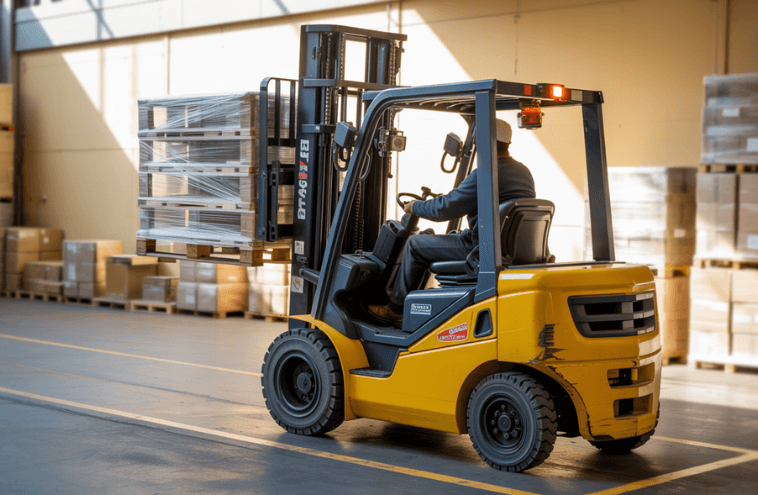
While transporting a load, keep the forks low for balance, and operate with a safe, steady speed. Do not turn with a lifted load; it leads to tipping. When placing a load, ensure it’s stable and aligned, then slowly back out without dragging the forks.
Common Mistakes When Using Forklift ControlsEven trained operators make errors, especially under pressure. Here are some frequent mistakes to watch out for:
Avoiding these errors can greatly improve safety and efficiency on the job.
Operating forklift controls requires more than technical skill — it demands awareness and a commitment to safety.
Here are key tips:
By maintaining these habits, you’ll reduce the risk of injury and improve workplace safety.
Not with proper training. Most beginners become comfortable after a few hours of hands-on practice.
Yes. Electric, diesel, and propane forklifts may have different layouts or additional levers.
In most regions, including Ontario, yes. Operators must be certified to legally use forklift equipment.
Knowing how to use forklift controls step-by-step is essential for every safe and skilled operator. From pre-check inspections to load handling and safety tips, mastering the basics allows you to operate confidently while protecting your coworkers and equipment.
Keep practicing, stay alert, and always follow site-specific safety protocols. The more familiar you become with your controls, the more efficient — and safe — your operations will be.
Also Read: Electric vs Diesel Forklifts What’s the Difference?


Leave A Comment