 647-740-8602
 info@ontarioliftrepair.ca

About Us
We denounce with righteous indignation and dislike men who we are to beguiled demoralized by the charms of pleasures that moment, so we blinded desires, that they indignations.
Conatct Us
54B, Tailstoi Town 5238 MT,
La city, IA 522364

54B, Tailstoi Town 5238 MT,
La city, IA 522364
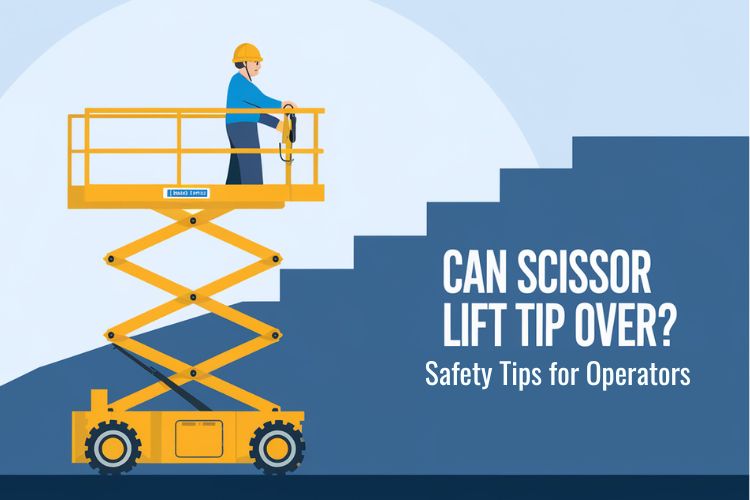
However, at the same time as they’re normally stable, scissor lifts can tip over on certain occasions, posing extreme risks to operators. This article will explore the query, Can Scissor Lift Tip Over? And provide essential safety suggestions to decrease the threat of accidents and injuries.
To understand Scissor Lift Repair, one needs to know that a scissor lift uses a crisscrossing metal guide system to elevate the platform vertically. This layout permits stability and offers a robust basis. However, notwithstanding their reliable production, scissor lifts can tip over if operated unsafely or below destructive situations. Expertise on why a scissor elevates would possibly fall over is essential for every operator, as tipping incidents can cause severe accidents or fatalities.
Will a scissor lift fall over? The quick answer is yes; under certain conditions, a scissor lift can tip over. Key factors like the elevate’s top, wind conditions, load weight, and floor stability play large roles in figuring out whether a scissor elevate stays solid. Focus on those elements can assist operators in saving tipping accidents.
To answer the question, How hard is it to tip a scissor lift? it’s vital to observe the common causes of tip-overs. Knowing those causes can assist operators in avoiding volatile situations and maintaining secure work surroundings.
To answer: Will a scissor lift fall over -each scissor lift has the most load capacity detailed with the aid of the producer. Exceeding this restriction affects stability, specifically at better elevations. Overloading a scissor carry will increase the hazard of tipping over.
A common question is, Can you drive a scissor lift while elevated? driving a scissor to elevate at the same time as it’s prolonged is risky, as the better middle of gravity makes it more likely to tip. Shifting an elevated scissor raise over uneven terrain in addition will increase the threat of a tip-over.
Wind is one of the main causes of scissor raise accidents. Excessive winds can effortlessly destabilize a scissor carry, especially when the platform is completely improved. Operators should monitor weather situations closely and decrease the carry when wind speeds increase.
Setting up a scissor raise on a choppy or volatile surface compromises its stability. The smooth or sloped floor is particularly volatile as it is able to motivate the lift to lean, increasing the likelihood of a tip-over. Continually make certain the ground is stable and degree before operating.
Brakes and outriggers are essential for stabilizing a scissor elevate. Forgetting to have interaction with the brakes or using the outriggers incorrectly can cause the raise to transport or shift, which would possibly cause tipping.
Tip-overs are a few of the most common scissor lift injuries, regularly leading to falls and injuries. So, are scissor lifts safe? Falling from a scissor lift during a tip-over can result in intense accidents or fatalities. Other common scissor lift accidents include falls from heights, electrocution while working near power lines, and collisions with other machinery. Information on the dangers can assist operators in raising awareness of safety measures to avoid injuries.
To reduce the threat of tipping, operators need to observe pleasant practices and protection recommendations. Here are a few critical safety tips that can help save you scissor tip-overs.
Often, analyzing the scissor lift is vital to make sure it’s in safe operating condition. test for any seen damages, and affirm that each one of the safety mechanisms, which include brakes and outriggers, is operating properly. Scissor Lift Repair needs to be done right away if you notice any troubles, as neglecting maintenance can increase the danger of a tip-over.
Overloading a scissor carry compromises its stability. Never exceed the manufacturer’s exact load capacity, as doing so can increase the probability of a tip-over. The load restriction includes the weight of each personnel and system at the platform.
To reply, how hard is it to knock over a scissor lift? The solution becomes much simpler when it’s multiplied and in movement. Avoid transferring the elevate while it’s multiplied, as this increases the middle of gravity and can cause a tip-over, particularly on uneven terrain.
Continually test wind speeds before working a scissor raise exterior. If wind speeds are above the manufacturer’s encouraged limits, it’s safer to avoid the use of the lift or to decrease it till situations enhance.
Operating a scissor lift on a strong, stage floor is one of the handiest approaches to reduce tipping dangers. Keep away from using scissor lifts on sloped, uneven, or smooth floors. If vital, use outrigger pads for added balance.
Despite the fact that PPE won’t save you a tip-over, it could assist guard the operator in case of a twist of fate. Operators must always wear protection harnesses and hard hats to limit the danger of damage.
Proper education is one of the best approaches to saving yourself from accidents. Operators must gain knowledge of scissor carry safety, expertise in the elements that could result in a tip-over, and the way to operate the elevator properly.
Driving a scissor lift while it’s elevated is exceedingly discouraged, as it substantially increases the risk of tipping. Moving over choppy ground or even minor barriers can cause the lift to tip, putting the operator and others nearby in danger. Usually, lower the elevation before moving it to the area. Additionally, if you’re wondering how safe are boom lifts, it’s important to follow proper safety guidelines to minimize risks and ensure safe operation.
So, Can Scissor Lift Tip Over? Sure, it can beneath positive situations. Factors along with overloading, high winds, risky ground, and driving while increasing the probability of a tip-over. Understanding those dangers and following vital safety practices are prime for stopping injuries. Regular inspections, adhering to weight limits, tracking weather situations, and proper training for operators are essential for keeping a safe painting environment.
Also Read: How to Operate a Scissor Lift Safely and Efficiently?


Leave A Comment